Wednesday 8/18/26 Bill Meyer Show Guests and Information
Podcasts on www.BillMeyerShow.com
Facebook – www.Facebook.com/billmeyershow
Podcast XML feed – https://media.rss.com/bill-meyer-show-podcast/feed.xml – On this feed you can download the podcast. Right click on the audio player and use the “Save Audio As” command.
6:30

Eric Peters, Automotive journalist with today’s “Wheels Up” day! www.EpAutos.com and just some of what we kick around includes:
https://www.ericpetersautos.com/2026/08/17/fun-cars-boring-cars/
https://www.ericpetersautos.com/2026/08/19/whats-wrong-with-flock/
https://www.ericpetersautos.com/2026/08/17/2026-range-rover-sport/
7:10 Seth Stern, Chief of Advocacy for the Freedom of the Press Foundation https://Freedom.press – Should the FCC be able to “beat up” on ABC News/Disney?
Disney has filed a federal lawsuit alleging that the Federal Communications Commission is violating its First Amendment rights by manufacturing pretexts to retaliate against it for ABC News reporting the president doesn’t like. Seth and I talk it over. The foundation has some pretty clever tools to help reporters protect sources from prying government eyes, too.
7:35 State Rep. Court Boice, HD1 in Curry County. It’s getting REAL hot out their over the growing Sheriffs Dept. Scandal. Court is calling for the Sheriff to resign.
8:10 Congressman Cliff Bentz in studio. A wide-ranging conversation on issues affecting the 2nd District including water availability, power, treatment of forests and wildfire. Cliff also talked about a bill that would encouraging turning our forest wood fiber into JET FUEL, making money AND helping reduce fuel load on the public lands.
________________________________________
Tuesday 8/18/26 Bill Meyer Show Guests and Information
Podcasts on www.BillMeyerShow.com
Facebook – www.Facebook.com/billmeyershow
Podcast XML feed – https://media.rss.com/bill-meyer-show-podcast/feed.xml – On this feed you can download the podcast. Right click on the audio player and use the “Save Audio As” command.
6:35 Dr. Carole Lieberman, M.D., M.P.H., is known worldwide as America’s Psychiatrist and The Terrorist Therapist®. She is a board-certified psychiatrist, media commentator, and author who has spent decades analyzing terrorism and its psychological impact on society. Her latest book is “Lions and Tigers and Terrorists, Oh My! How to Protect Your Child in a Time of Terror.” We talk about this story and the crazy women going for killer “Luigi”.
FIND HER WEBSITE HERE AND HERE AND HERE:
BIO: Carole Lieberman, M.D., known as America’s Psychiatrist, is a Board-Certified Beverly Hills psychiatrist.
7:35 Former State Senator Herman Baertschiger – Topic of the day – Should our counties become non-sanctuary counties like Douglas County?
8:10 Attorney John O’Connor, is author of Postgate: How the Washington Post Betrayed Deep Throat, Covered Up Watergate, and Began Today’s Partisan Advocacy Journalism
WEBSITE
We discuss the MASSIVE Meta lawsuit in California:
BIO: John O’Connor is an experienced trial lawyer, practicing law in San Francisco since 1972. He has tried cases in state and federal court throughout the country. He served as an Assistant U.S. Attorney in Northern California from 1974-1979, representing the United States in both criminal and civil cases.
8:40 OPEN FOR BUSINESS with Lisa McClease-Kelly from NETWORK IN ACTION www.sonetworking.com and how Lisa’s looking for 2 or 3 different businesses to join…we talk about that and also get to know:
Justin Sanders of Sanders Home – 541-351-8050 www.Sanders-Homes.com
And Mary Hambleton from SOUL CANYON, Computer and Business Training That REALLY Works!
www.SoulCanyon.com call 541-218-7601
_________________________
Monday 8/17/26 Bill Meyer Show Guests and Information
Podcasts on www.BillMeyerShow.com
Facebook – www.Facebook.com/billmeyershow
https://media.rss.com/bill-meyer-show-podcast/feed.xml
6:35 Gerson Gibbs is the Senior Managing Partner of Belite Capital. www.BeliteCapital.com Gibbs is a former Financial Industry Regulator and examiner who oversaw financial institutions like JP Morgan Chase, Wells Fargo, and UBS. Here’s what we discussed:
What if you thought you were in for a big payday and found out the stock you purchased was sold long ago and without notice? So called Special Purpose Vehicles or SPVs have grown in popularity in recent years. They are attractive because as startup valuations swell, and venture-capital firms can’t keep up, SPVs tap into funding from individual investors desperate for a piece of the pie.
Sounds like a sound investment but some investors hoping for a big payday when SpaceX went public earlier this year instead found out they had no stock in the company. SPVs act independently; they aren’t subject to the same regulatory oversight as mutual funds, and they aren’t required to publicly report their holdings or investors. It’s a gray area that many an investor is now finding out can mean you’re on the outside looking in.
So what are the dangers of working with SPVs and how can they give you false hope when the company you’re eyeing finally goes public?
7:10 Pacific Legal Foundation’s Amy Peikoff argues that Americans vandalizing Flock license-plate cameras should sue instead, as a June Supreme Court privacy ruling gives Fourth Amendment challenges new strength.
Twitter Linkedin Download Image
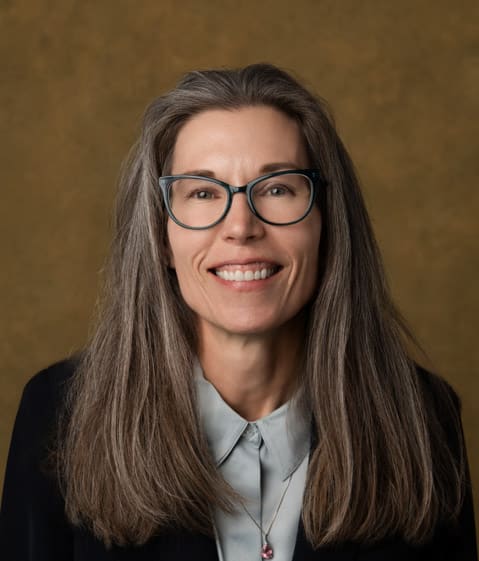
Amy Peikoff is an attorney at Pacific Legal Foundation. After managing a Sam Goody record store at 19, Amy went on to earn three degrees, all of which she has drawn upon at some point in her career: Math/Applied Science (BS, UCLA), Law (JD, UCLA), and Philosophy (PhD, University of Southern California).
During law school she served as an Editor on the UCLA Law Review and did an externship with Judge Alex Kozinski of the Ninth Circuit. At USC she wrote her dissertation on privacy and its proper legal protection. She’s taught at universities (UT Austin, UNC Chapel Hill, United States Air Force Academy) and law schools (Chapman, Southwestern), publishing frequently cited law review articles on privacy law, as well as op-eds in leading newspapers.
In 2019 she founded and was president of the Center for the Legalization of Privacy, which submitted an amicus brief in United States v. Facebook, arguing that the government’s proposed consent decree provided unconstitutional warrantless access to Facebook user data to both the Federal Trade Commission and the Department of Justice. In 2020, she became Chief Policy Officer for the free-speech social media platform Parler, a position she held during the platform’s unjust scapegoating and deplatforming in January 2021, as well as during the subsequent rebuilding and return to the App Stores, until the platform was purchased and taken offline in April 2023. She then served as Chief Policy Officer for the free speech video–sharing platform BitChute before co-authoring, with PLF Senior Attorney Mark Miller, an amicus brief filed in the Fifth Circuit case United States v. Smith.
She looks forward to continuing to work on this and other cases in her area of expertise, the “third-party doctrine”, and property rights more generally.
Someone in upstate New York took an electric saw to them. In California, they’ve been knocked down and vandalized. In Idaho, a man rammed a truck into two of them. This summer, a 19-year-old worked his way down Florida’s First Coast with cans of silver and gold spray paint, hitting cameras along the way; he told police he doesn’t trust license-plate readers.
Left and right—pun intended—Flock Safety’s automated license-plate readers have inspired a leaderless revolt. Anti-Flock sentiment is a rare cause capable of uniting a constitutional conservative in Texas with a progressive in Massachusetts. Cities from Eugene to Knoxville to Los Angeles have canceled or suspended their contracts with Flock.
The outrage is understandable. A private company has, with governments’ blessings and your tax dollars, blanketed American roads with roughly 120,000 cameras that log every passing plate into a nationwide, searchable database accumulating billions of records every month. All dystopian clichés—Orwell’s 1984, Rand’s Anthem, Bentham’s Panopticon—are apt. READ MORE: https://pacificlegal.org/a-can-of-spray-paint-is-not-an-argument/
But sawing down a camera is double-plus ungood. And for Pacific Legal Foundation, an organization that upholds property rights, it’s worth saying plainly: Physically damaging Flock cameras answers a claimed rights violation with an established one. A man with a spray can facing vandalism charges could have instead been a plaintiff vindicating our Fourth Amendment rights.
A better kind of protest
Carl Gunn leveled up. When a Flock camera appeared near his St. Petersburg neighborhood, he taped a sign to his pool skimmer, set up a lawn chair, and spent hours blocking its lens with his sign.
Others have gone digital. DeFlock is a crowdsourced map of license-plate readers, and FlockHopper will route you around them.
These forms of do-it-yourself Fourth Amendment protection are better than vandalism—peaceful, legal, and clever. But they’re just workarounds. The data-hoovering resumes the moment you fold up your lawn chair. To restore constitutional protections, we need to make use of two unrivaled tools: litigation and legislation.
Why the courts are newly promising
When cities contract with Flock to run their camera networks and grant police database access, the company acts as the government’s agent. What Flock searches and collects, the government searches and collects.
And now the government has a problem. In June, in Chatrie v. United States, the Supreme Court held that when police obtained a suspect’s location data through a “geofence” warrant—a dragnet search of millions of accounts to find everyone near a crime scene—that violated Chatrie’s “reasonable expectation of privacy” and therefore was a Fourth Amendment search.
Crucially, the Court rejected the government’s position that grabbing only a narrow, time-limited slice of a larger data trove was acceptable. Once the Fourth Amendment applies, the Court held, it doesn’t matter how small a bite investigators took.
For anyone challenging a government’s use of Flock cameras, that finding is a gift: “We collected it all, but we looked at only a little” is now likely a dead end.
Whose property was searched?
Justice Neil Gorsuch’s concurrence presents an even-more-promising path toward enduring Fourth Amendment protection. Rather than ask whether society deems an expectation of privacy “reasonable”—a test that shifts with every new gadget or data type—he asked whose property was searched. Ownership’s implications carry across technologies; expectations do not.
In the Flock scenario, Justice Gorsuch might say the government requires you to bolt a plate onto your car. Then a camera network converts that compelled affixed identifier into a 24/7 location tracker. Functionally, it’s the same tracking device the Court condemned in United States v. Jones. You agreed to display an identifier, not to carry a tracking device everywhere. And yet the next step is already for sale: Defense contractor Leonardo offers an accessory that captures Bluetooth, WiFi, and RFID signals leaking from your phone and other devices—and ties them to your plate. Soon every plate read may include a virtual, contactless, suspicion-less patdown.
Standard uses of Flock cameras are dystopian; misuses are the stuff of horror movies. Officers in a dozen states have used Flock to stalk ex-partners and others. We criminalize stalking because trailing another person’s every movement is a recognized harm. The Fourth Amendment simply imposes the same limits on government. Journalists have reported wrongful stops, like the car reviewer swarmed by squad cars over a misread dealer plate. Some have searched the system for an item of clothing, a tattoo, even a person’s race. What enables such abuses is retention: the fact that an extended record of your movements is kept, sitting in a database, waiting to be searched.
The principled legislative fix
Cities increasingly see their options as all-or-nothing: keep the surveillance dragnet, or rip the cameras out. The correct legislative answer is neither of these. License-plate readers have located missing children, recovered stolen cars, and placed a suspect’s vehicle at a crime scene. But a camera on a public road recording what a police officer standing there could see is doing plenty—and is doing nothing the Constitution forbids. The rights violation lies in keeping location records—on everyone, for extended periods, absent particularized suspicion. That is the modern general warrant our Fourth Amendment was written to prevent.
Allow cameras on public thoroughfares, but limit data retention. Keep a plate read long enough to check whether there’s a particularized basis for retaining it—a hotlist hit or a tie to an open, reported incident—and purge everything else automatically in a day. And create an audit log for every last query. Yes, a short retention window means a crime reported weeks later won’t be solved by a plate read waiting in the system. That’s a cost, but it’s one the Fourth Amendment’s drafters intended—a cost of freedom.
Channel the energy
If Flock cameras have you reaching for a spray can, pause before you paint. If your town turns your license plate into a 24/7/365 tracking device without your consent, that isn’t a nuisance to be sawed off a pole—it’s an opportunity to stand up for your Fourth Amendment rights. Contact PLF’s property rights attorneys through our case intake form, and let’s answer a rights violation the way the Constitution invites: in court.
7:35 Ryan Morgan, a reporter for the Epoch Times, and he focuses on military and foreign affairs.
We talk about the USS Lincon deployment. Secretary of War Pete Hegseth Pushes Back on Reports of Deteriorating Conditions Aboard Aircraft Carrier Lincoln. The secretary of war responded to allegations of rising suicide risks and faltering hygiene on the USS Lincoln as its deployment nears the nine-month mark.
8:10 Dr. Dennis Powers, retired professor of business law at SOU and historian www.DennisPowersBooks.com brings today’s edition of “Where Past Meets Present”.
Mt. McLoughlin
By Dennis Powers
When driving southward on I-5 towards Medford, the near-perfect, mirror image of Japan’s Mt. Fuji appears. Although Mt. McLoughlin at 9,495 feet high is the tallest volcano between Mt. Shasta and Crater Lake, its base size is dwarfed by the much taller Mt. Shasta (14,162 feet high with near thirty times more volume) and Crater Lake’s Mt. Mazama (ten times as much)—but this one dominates the lower Valley. From distant Medicine Lake in California, around the rim of Crater Lake, or along I-5 between Yreka (California) and Medford, Mt. McLoughlin is easily recognized.
The symmetrical shape appears when viewed from the south or southeast. It becomes apparent that a large part of the mountain is missing when seen from a different direction; for example, from the north along the Crater Lake rim or east from Klamath Lake. This was due to late Ice-Age glaciers that shaved away the mountain’s northeast side, lowering the summit by 300 feet and gouging out a large bowl-like hollow.
The mountain is a young volcano geologically. Formed by a series of eruptions and cooled lava flow over long periods of time, geologists have determined that its steep-sided, lava cone is less than 700,000 years old. Indicating later eruptions, its western and southern flanks suggest that the bulk of its form is no older than 200,000 years, with much of this probably younger, perhaps as late as 20,000 to 30,000 years ago.
Leaving Fort Vancouver to trap beaver and otter for sale in England, Hudson Bay Company’s Peter Skene Ogden traveled through Central Oregon. Ogden’s journal contains this notation for February 14, 1827: “I have named this river Sastise River. There is a mountain equal in height to Mount Hood or Vancouver; I have named (it) Mt. Sastise. I have given these names from the tribes of the Indians.” Historians believe that he actually spotted the Rogue River and Mount McLoughlin, and this would have been the first recorded observation.
The name tributes John McLoughlin, one of the most influential figures in the early 1800s in Pacific Northwest history. The Oregon legislature renamed the peak from Mount Pitt to Mt. McLoughlin in 1905, and the U.S. Board of Geographic Names recognized that change in 1912.
McLoughlin was Canadian born and didn’t become an American citizen until he was 67 years old. However, he had been a frontier doctor, British fur trade officer, the founder of Fort Vancouver (1825) and of Oregon City (1842). When he was the Chief Factor (Superintendent) of the British Hudson Bay Company (“HBC”), based at Fort Vancouver on the Columbia River, American pioneers arrived there without supplies. As the last stop on the Oregon Trail for many, they asked McLoughlin to help them survive their first winter in Oregon. He did—although this later cost him his job. Dr. John McLoughlin’s key role in Oregon’s early history prompted the state legislature in 1957 to name him the “Father of Oregon” on the 100th Anniversary of his death.
On July 1, 1927, a two-foot diameter pipeline began carrying water from Mt. McLoughlin by gravity flow to Medford (and eventually other cities in the Bear Creek Valley). Its snowmelt percolates through the porous, volcanic soils to emerge again at Big Butte Springs (2,700-foot elevation) near the town of Butte Falls and provides the area today with the great majority of its water needs.
The access to Mt. McLoughlin is considered “remarkably easy” via Oregon Highway 140 between Medford and Klamath Falls. Held in high esteem by residents, the thick conifer forests around its base and other nearby mountains provide enjoyable hiking and fishing. After the snow has melted from the trail, hikers have a relative hard hike ahead, but the views are magnificent—and a continued tribute to this Southern Oregon landmark.
Sources: “USGS/Description: Mt. McLoughlin Volcano, Oregon,” at its website; “The McLoughlin Memorial Association,” at its website; Jeff LaLande, “The Oregon Encyclopedia: Mt. McLoughlin,” at its website.